


The Contract Clause
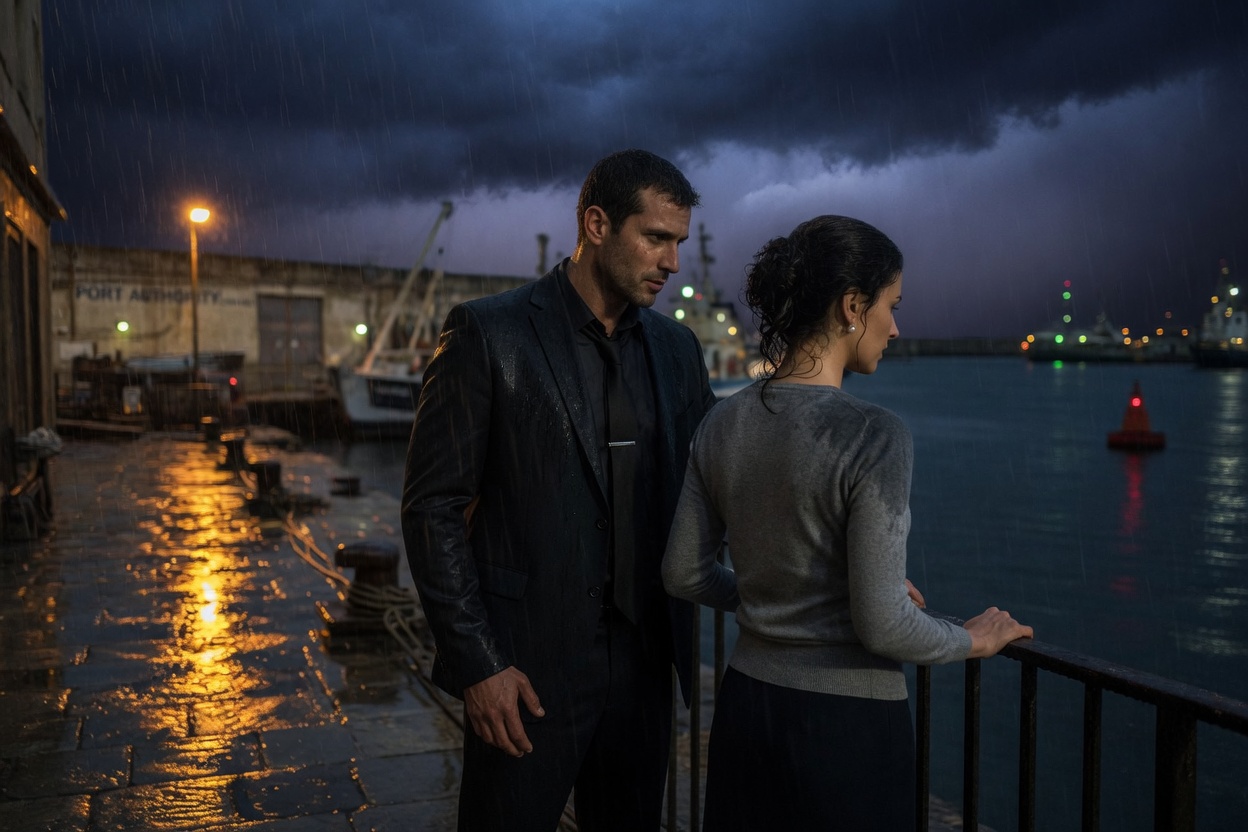
The question Elena Marchetti asked herself on the worst night of her life was simple and ruinous: what do you do when the only man standing between you and a killer is a man your family's rules forbid you to touch? She had asked it once before, in a different form, the day she signed the cooperation agreement, and she had not liked the answer then either. The answer had always been the same. You endure. You obey the clause. You keep your hands flat on the table of your life and you wait for the storm to pass. But the storm that October had a name, a gun, and a set of grey eyes that watched her the way lighthouses watch for shipwrecks, and Elena was beginning to understand that some ships are meant to wreck.
One: The Clause
The contract Dante Cruz signed was fourteen pages long, and the clause that mattered was only one sentence.
Section nine, subsection three: the Contractor shall maintain absolute professional distance from the Principal, and any personal or intimate entanglement constitutes immediate termination and forfeiture of all compensation. His lawyer had underlined it twice. Dante had initialed beside it without a flicker of hesitation, because at the time the woman at the center of the contract had been a photograph, a threat assessment, and a paycheck. Elena Marchetti, thirty-one years old, sole heir to the Marchetti Shipping Group, currently cooperating with federal prosecutors against her own father. High risk. High profile. High maintenance, the previous detail chief had written in his handover notes before disappearing into a witness relocation program of his own choosing.
Then he had met her, and the clause had stopped being a sentence and started being a war.
She came down the stairs of the safe house at six in the morning in a grey sweater and bare feet, carrying two cups of coffee, and she stopped when she saw him checking the window seals. "You take your coffee black," she said. Not a question. "I've been watching you drink it for nine days. It's the only interesting thing you do."
"My job is to be uninteresting," Dante said.
"Then you're spectacular at it." She set the second cup on the table near him and walked away, and he stood there with the steam rising between his hands like evidence of something he would have to destroy later.
He drank the coffee. That was his first mistake. The clause did not say anything about coffee, but Dante had been a soldier and then a mercenary and then the Marchetti family's cleaner of last resort, and he knew how confessions started. They started with a cup someone made for you.
Two: The Woman Who Burned Her Own House
Everyone in his world had an opinion about Elena Marchetti. The old men called her a traitor in voices pitched for sympathy and thick with relief that it was her father on the stand and not them. The prosecutors called her brave in press conferences and ruthless in depositions. Dante had spent eleven weeks reading her file before he ever read her face, and the file told a story the newspapers had missed.
She had not turned informant out of fear or revenge or a lover's spat. She had turned because in the spring of her twenty-eighth year she had found a manifest in her father's safe showing that a container flagged for humanitarian aid had been used, twice, to move people. Not contraband. People. She had confronted her father over dinner, calmly, the way he had taught her to confront everything, and he had smiled at her and said the world runs on the fuel it can get. She had eaten dessert. Then she had gone home, put on the recording device the FBI gave her, and begun the two years of quiet, surgical work that ended with her father's empire in federal custody and her own name on four separate kill lists.
She had burned her own house down with the people still in it, morally speaking, and the thing that unsettled Dante was not that she had done it. It was that she would do it again, and she knew it, and she had made her peace with that the way sailors make peace with the sea.
"You read my file," she said to him on the twelfth day, in the safe house kitchen, while he pretended to inventory the pantry. "I can always tell. People who haven't look at me like I'm either a saint or a monster. People who have look at me like I'm weather."
"What do you want them to see?"
"Nothing," she said. "That's the trick of it. I want to be unreadable." She opened a cabinet, took down a jar of honey, and did not use it. "But you. You look at me like you're trying to decide whether to put me in a report or a prayer."
"Neither," Dante said. "I don't write prayers and I've learned what happens to people who end up in my reports."
She smiled then, and it was the first honest thing he had seen her do, crooked and tired and lit from somewhere below the surface, and Dante understood with the clarity of a man watching the tide go out that the clause was going to fail. Not tonight. Not this month. But eventually, the way all walls fail, from the inside.
Three: Threats, Ranked and Revised
The security brief was simple. Someone had paid for her death twice already, and both attempts had failed on luck and logistics rather than skill. The trial began in five months. Her job until then was to stay alive and stay rehearsed; her testimony was the keystone of the whole federal case, and there were men with better lawyers than consciences who understood that arithmetic perfectly.
Dante rebuilt her protection from the studs. He moved her twice, ghosted her through three cities, and taught her to sleep with the closet light off because the light showed through door seams. He taught her to shoot. She was a terrible student and then, abruptly, a good one, the way she was good at everything that required cold hands and a colder head.
"You held the weapon wrong on purpose," he said, after she hit eight of ten at the range. "The first week. Why?"
"Because a woman who can shoot is a threat assessment," Elena said, setting the pistol down with care. "A woman who can't is a liability, and liabilities get carried." She looked at him, level. "I needed to know which one you were before I decided what to be."
"And?"
"You carry nothing," she said. "You stand next to things. It's the loneliest way to be brave I've ever seen."
He should have written that down in the daily log. Instead he wrote range session normal, subject in good spirits, and sat in the parked car outside for forty minutes afterward, doing the math on what his life was becoming. Dante Cruz had done things in the Marchetti organization's service that would make her testimony read like a bedtime story. He had not been a soldier of fortune in any romantic sense; he had been the instrument her father reached for when the problem required a man who did not exist afterward. He was on the witness list too. The prosecution had offered him immunity for his testimony against the old regime, and he had sat on the offer for a month, because his testimony would also touch her, and he had begun, without permission, to protect her from himself.
The clause protected her from his hands. Nothing in fourteen pages protected her from his past. He decided, in that parked car, that this was the wall he would hold: he could want her until it killed him, but she would never have to learn what he had done. Some vows you make to the woman, and some you make to the version of her that can still sleep at night.
Four: The Night the Lights Went Out
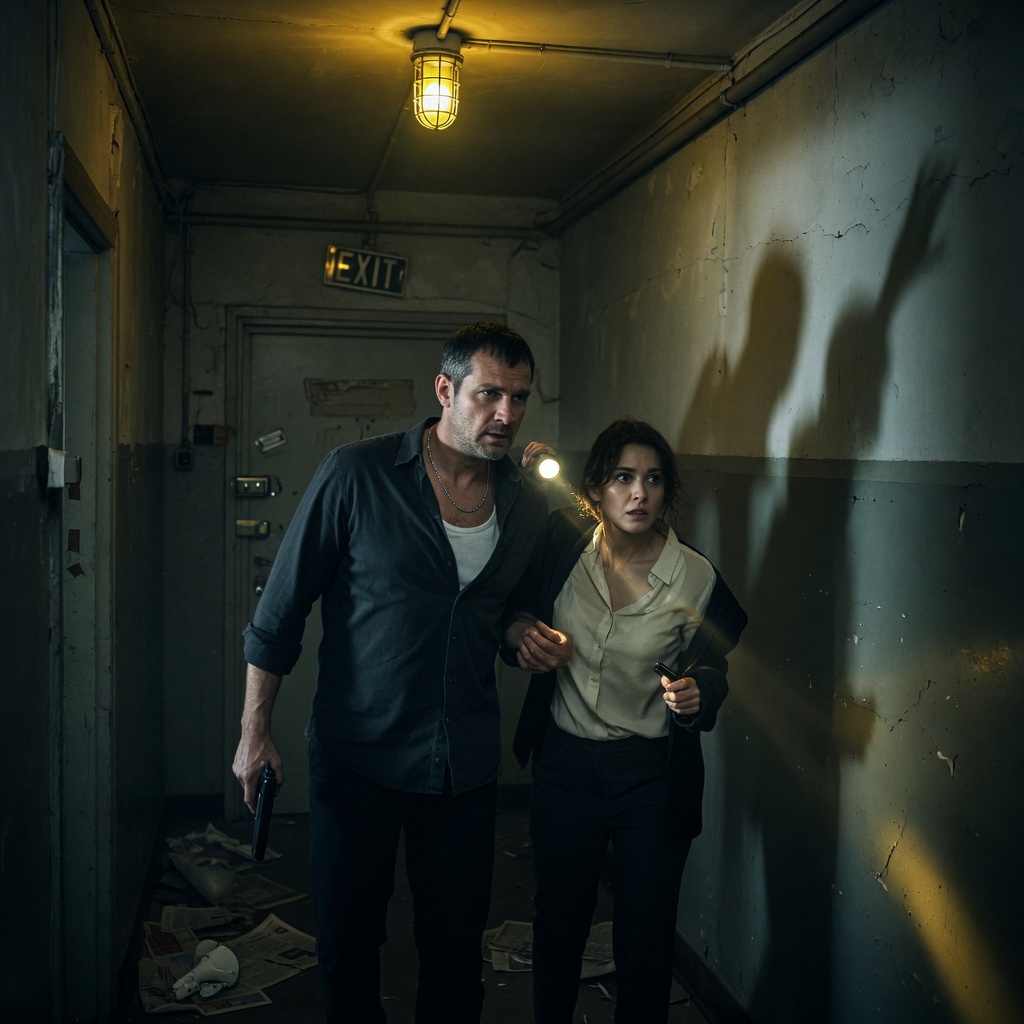
The attack came on a Tuesday, which offended Dante's sense of drama. Later he would learn the Tuesday had been chosen because the utility maintenance schedule put four blocks of the neighborhood dark for three hours, and the man they sent had done his homework. The power died at 2:14 in the morning. Dante heard the generator fail to start, which it should not have failed to do, and he was moving before the backup lights finished blinking on.
He found her in the hallway, awake, dressed, shoes on, the pistol he had taught her to use held correctly now, low and ready. "Back door," she said. "I heard the fence."
"Front," he said. "Back is the diversion."
They went through the hall together, his hand on her shoulder blade, and the man came through the kitchen window exactly as Dante had read the night. What happened next took eleven seconds and left the intruder zip tied to the radiator with a broken wrist, and left Dante bleeding from a shallow cut along his ribs where a box cutter had found him. Elena did not scream and did not faint. She held the light. Her hands were steady. She said, "Where else are you hurt," in the voice of a woman triaging a soldier, and when the police took her statement she did not look once at the man on the floor. She looked at Dante the whole time.
Afterward, in the kitchen, she cleaned the cut on his ribs with the efficiency of someone who had grown up around men who got hurt for a living. Her fingers were warm. The house was full of strangers in tactical vests and Dante's shirt was open to the waist and none of that was the point. The point was that she stopped, with her palm flat over his heart, feeling the pulse she had just spent ten minutes working near, and she said, very quietly, so quietly the patrolmen in the next room could not have heard, "I thought about you the whole time. Not the shooter. You. Whether you were okay. Do you understand what that means?"
"Elena."
"Say the clause," she said. "Say it out loud and I'll stop."
He could not say it. He stood there with her hand over his heart and his blood on her cuff and he could not produce a single word of section nine, subsection three, and she saw it, and she nodded slowly, and then, with the discipline that had dismantled a criminal empire, she stepped back, folded the bloodied towel, and said, "Then we wait. We wait until the trial is over, because I will not hand them a scandal to discredit me with, and you will not hand them a lever to break you with. But Dante. We wait. That's a promise, not a refusal."
Enthusiastic, patient, chosen. He had expected the wanting to be the hard part. It turned out the waiting was the part that felt like devotion.
Five: The Prison Visit
Her father requested the visit through his lawyer in November. Family welfare, the filing said. Dante sat in the second row of chairs in the visitation room of the federal detention center and watched the man who had once, over a card table in Palermo, told Dante which name to make disappear, shake hands with the daughter who had ended him.
Salvatore Marchetti looked smaller than his reputation. He also looked entirely unrepentant, and his first words were, "You're sleeping with the bodyguard. Or you want to. Your mother did the same thing, you know, chose the help over her own blood. It's in the blood with you women."
Elena did not flinch. "I came because my lawyer said declining looks worse in front of the jury," she said. "You have four minutes of my life. Use them on something other than my choices."
"They'll eat you alive on that stand," her father said. "And your soldier there, when his testimony comes, they'll pull the whole thread. Ask him what he did in' nineteen. Ask him about the Giordano warehouse." His smile was the one from her childhood, warm as a lamp and twice as wired. "You think you found a good man. You found the man I made."
Dante did not move. But Elena turned in her chair and looked at him, really looked, and he watched her assemble the truth from his face faster than her father had calculated. Her voice, when it came, was even. "Thank you for that, Papà. Truly. You've just saved us both four months of dread." She stood. "The difference between us is that I burned my own house down and I'm proud of it. You burned other people's and called it weather."
They did not speak in the car. They did not speak at the next safe house, a farmhouse outside Frederick with oak trees and bad cell service. But that night she came down the stairs in the grey sweater and stood in the doorway of the room where he sat with his logbook, and she said, "The Giordano warehouse. Nineteen. Tell me or don't. But if you don't, tell me you're deciding for you, and not for me."
So he told her. All of it, in a flat voice, across a farmhouse table, with his hands open on the wood like a man showing he held no weapons. What he had been. What he had done. What he had told himself to keep doing it. She listened without moving for forty minutes, and when he finished she was quiet for a long time, and then she said, "Do you know what I was afraid you'd say? I was afraid you'd make it sound noble."
"It wasn't."
"No," she said. "It wasn't. And you're going to testify anyway, and I'm going to sit in that courtroom and hear it, and I want you to understand that this is the thing that makes it possible. Not despite the file. Through it." She came around the table then, slowly, giving him every second to move away, and stopped a hand's width from him. "The clause says we can't touch. It says nothing about this. Ask me properly, Dante. Ask me what I'm choosing, so neither of us can ever pretend it was the fog of war."
"Elena Marchetti," he said, and his voice broke on her name like a man finally setting down weight, "do you choose this? Knowing what I am, what I was, what it will cost us both if it ever reaches daylight?"
"Yes," she said. "Out loud, on the record, in front of the only witness I trust. Yes."
They touched then, and it was nothing like the novels promised and everything like relief. It was her hands on his face and his forehead against her shoulder and eleven weeks and two lifetimes of distance collapsing into the simple, scandalous fact of two adults choosing each other with their eyes open. Later there would be more. Later there would be everything. That night was for the choosing itself.
"The worst thing my family ever taught me was that love is a liability on the balance sheet. The best thing you ever taught me is that the right person makes the liability worth carrying."
Six: The Lever
Her father had not been bluffing. Ten days before the trial, Dante's immunity offer evaporated and a federal subpoena arrived with the Giordano warehouse at its center, and alongside it, forwarded by the prosecution with an apologetic cover letter, came photographs. Dante and Elena at the farmhouse. On the porch. Her hand in his hair. Taken from a distance that meant someone had been watching for weeks, which meant the defense had them, which meant section nine, subsection three was about to be read aloud in a federal courtroom by men whose only goal was to make the star witness look like a woman who bought her testimony with her body.
Dante read the subpoena at the kitchen table while Elena slept badly upstairs, and he did what soldiers do. He began planning a retreat. A false confession of a different sort, a resignation letter dated months back, a story where he was the predator and she the fooled principal, anything to keep her testimony clean. He was three paragraphs into the lie when she came down the stairs in bare feet and read it upside down, the way she read everything, and took the paper out of his hands.
"No," she said.
"Elena."
"You don't get to burn for me," she said, and her voice was shaking now, the first crack in her since the day the lights went out. "I have watched every man in my life decide what I could survive, and I am so tired, Dante. I am so tired of being carried. Sit down. We are going to do the one thing nobody in either of our worlds has ever done."
"Which is?"
"Tell the truth," she said, "in order, out loud, first."
They called her prosecutor at six in the morning. They told her everything: the relationship, its timeline, its consent, its patience, the clause they had honored for eleven weeks and broken only after a near fatal night and a conversation that would have passed muster at an ethics board. Elena dictated a sworn statement about her own agency that the prosecutor later described, off the record, as the most formidable document she had ever filed. And Dante signed a statement that said plainly: I was the instrument of the Marchetti organization. I am testifying of my own free will, for my own reasons, and the woman in this case is neither my motive nor my accomplice. She is the reason I stopped needing to disappear.
The defense used the photographs anyway. Of course they did. They spent a full day of the trial on section nine, subsection three, on the word entanglement, on the suggestion that everything Elena Marchetti had done for two years was arranged in service of an affair. And Elena took the stand in a grey suit with her father's eyes across the room, and when the defense lawyer waved the porch photograph like a winning hand, she looked at the jury and said:
"You're right that we broke the contract. A clause about touching. I broke it, by the way, not him; he tried to protect me from it to the point of perjury, which I stopped, because I don't let anyone lie for me. I spent two years in my father's house watching men break laws about human beings and call it business. I broke a rule about holding hands on a porch. Weigh those two things on whatever scale you brought, and then ask the man who wrote that clause whether, in eleven weeks under the same roof, he laid a finger on me before I asked him to. Ask him why he tried to confess to a crime he didn't commit to protect my credibility. If that's what a breach of contract looks like, sir, I'd like to see your marriage."
The courtroom laughed, briefly, the way courtrooms do when the truth is too clean to argue with. The photographs became what they actually were: evidence that she was human. Her father's empire, meanwhile, became what it had always been, which was a verdict.
Seven: The Cost
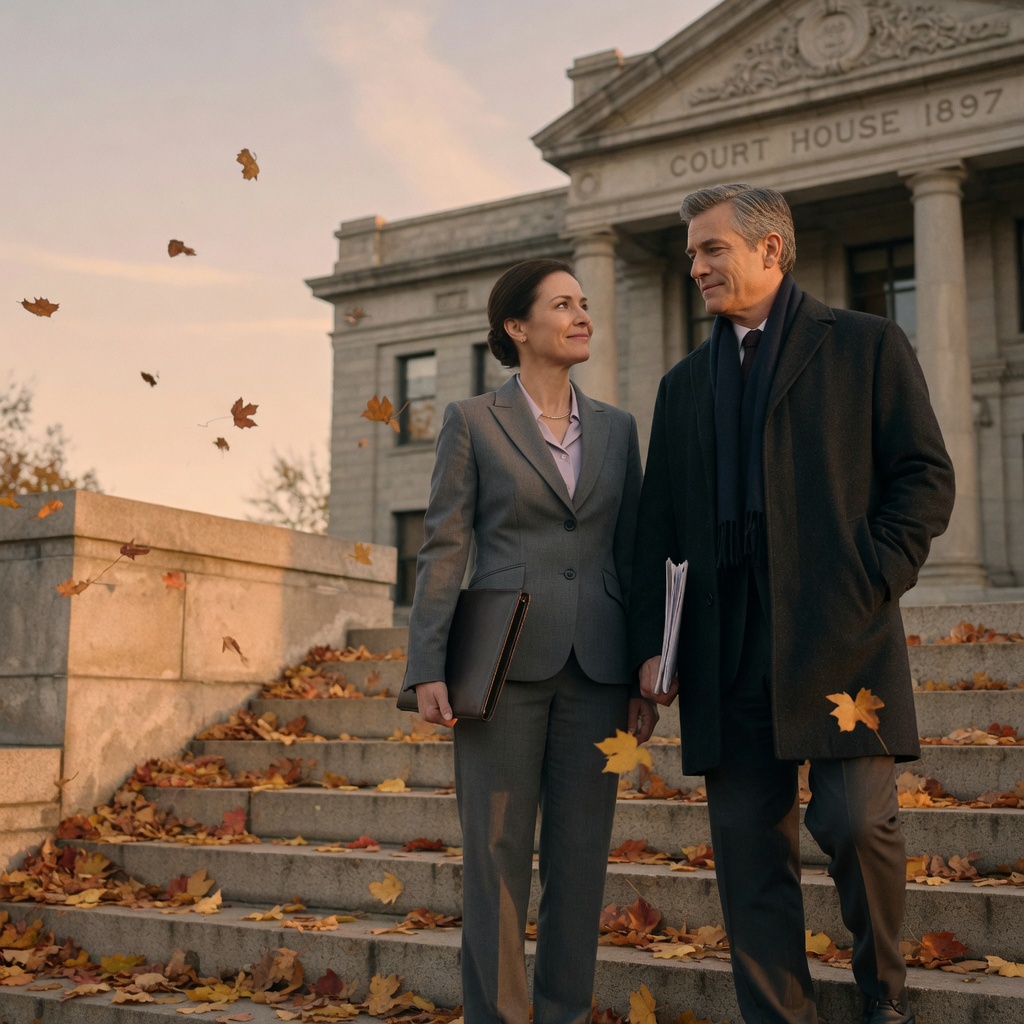
The verdict came in on a Thursday in early spring, and the sentence came down like weather, and the Marchetti Shipping Group was sold in pieces to buyers who promised, in press releases, to do better. The kill lists did not evaporate, but they lost their financiers one by one, and by summer the threat assessment on Elena Marchetti was downgraded from critical to elevated, which is the security industry's way of saying you may exhale occasionally.
The costs were real. Dante's immunity covered the testimony and not the conscience; he pled to two counts and served seven months in a minimum security facility that he described afterward as the first place he had ever slept without one ear open. Elena visited him every visiting day she was allowed. She was not allowed to touch him through the glass, and she observed that rule with a smile, because they had both learned the difference between a rule that protects and a rule that cages, and neither of them was interested in cages anymore.
He lost the contract, obviously. Forfeiture of all compensation, per the terms. The firm blacklisted him for the breach, and he spent his first free month planting oak trees on her land in Frederick because it was work he could do with his hands and without a weapon, and because the farmhouse needed them.
She lost the name. Marchetti was a brand and a target and a father all at once, and she let the name go in a courthouse with the same pen stroke that had ended the empire, keeping only the parts of her inheritance that could not be confiscated: her spine, her signature, and her habit of reading people upside down. She started a foundation with the settlement money, the kind that audits manifests and asks uncomfortable questions about containers, and the first donor card was signed by a man who had once been the reason such audits were necessary.
"People ask me if it was worth it," she said to him in October, one year to the week since the coffee, standing on the porch where the photograph had been taken. The oaks were saplings and would not shade anything for twenty years. "The house, the name, all of it."
"Is it?"
"I burned my father's kingdom and got a farmhouse," she said. "I traded an empire for a man who tried to perjure himself to protect my reputation and plants trees he'll be old when he sees grown. Yes, Dante. It was worth it. It was the best trade I ever made." She leaned into him, and the clause was fourteen pages of ash behind them, and the porch light came on with the dusk the way it did every night now, because she had decided that a home should announce itself. "But I want it on the record that the oak trees were a better investment than the empire."
"You'll get no argument from me," he said. "I've never been good at arguing with the boss."
"Liar," she said, and kissed him, and there was no one left in the world with a contract that made it a crime.
Eight: The New Terms
From the amended agreement, drafted by hand on farmhouse stationery, unsigned because some documents exist to be outlived:
Section one. The parties acknowledge that the original clause was written by frightened institutions for frightened people, and that while fear is often correct, it is never the whole of the law. Section two. Professional distance is hereby replaced by chosen proximity, renewed daily, revocable at any time, by either party, in any weather. Section three. Neither party shall protect the other from the truth. Both parties have survived worse. Section four. Coffee will continue to be made black. The clause about coffee is eternal.
They kept the farmhouse. They kept the oak trees, and the porch light, and the habit of asking each other, out loud, on the record, in front of the only witnesses they trusted: do you choose this? And the answer, every morning, in grey sweaters and bare feet, in the language of people who had both been built by darkness and decided against it, never changed. Yes. Out loud. On the record. Yes.

Serena Blake
Serena writes romantic suspense and dark romance for readers who want pulse and payoff. Her stories chase trust as hard as they chase danger.
Leave a comment
Comments