



The Bridge Clause
The Clause
The lawyer read the clause twice, as though repetition might soften it, and the second reading changed nothing. In the rain-gray office above LaSalle Street, on the fourth of November, 1893, Cordelia Hale listened to the terms of her father's will and understood that Augustus Hale had arranged her future the way he arranged a truss: every member loaded, nothing left to chance, and no way out that she could see.
"Item the ninth," said Mr. Prentiss, running his finger down the page without any pleasure in it. "The whole of my holding in Hale Bridge and Ironworks, being sixty-one parts of one hundred, shall pass into trust for my daughter Cordelia, provided she shall have entered into lawful marriage on or before the twelfth day of February, 1894, being her thirtieth birthday. Should she fail of that condition, the holding passes to my brother Ambrose absolutely. Should the marriage be dissolved within two years of its making, the same reversion applies."
The rain ticked against the window. Across the table, Ambrose Hale crossed one leg over the other and smiled the way a man smiles at a shipment he has already sold. "My brother loved order," he said. "And order demands a head of household. I have had encouraging conversations with Vandermeer Iron, Cordelia. Consolidation is the modern spirit. Sensible economies. A firm of that temper cannot be trusted to a spinster's sentiment."
She did not look at him. She was doing arithmetic instead, the cold kind her father had taught her at the dinner table with spoons and a salt cellar, loads and reactions, what a structure could carry before it failed. Two hundred and fourteen men on the payroll. The Halsted Street crossing half built over the south branch of the river, her father's last argument with the water. If Ambrose sold to Vandermeer, the works would be stripped inside a year. The anchorage patent would be shelved in favor of the Vandermeer standard. The men would scatter into winter with no letters of character. Everything her father had built would be weighed and sold by the pound.
"How long do I have?" she asked.
"Ninety-nine days," said Prentiss.
She stood and pulled on her gloves, and the question she carried out of that office was the one she would still be answering a year later, in better weather and in a far better mood: what exactly turns a signed paper into a marriage, and can a person choose the answer on purpose? She had drafted every drawing in that firm marked C. Hale since she was twenty-one. The will treated her like a fixture to be transferred. Very well. She would choose the man herself, on her own terms, or she would watch the whole works go to the wreckers. She had ninety-nine days, and she knew precisely where the strongest steel in Chicago kept its office hours.
The Candidate
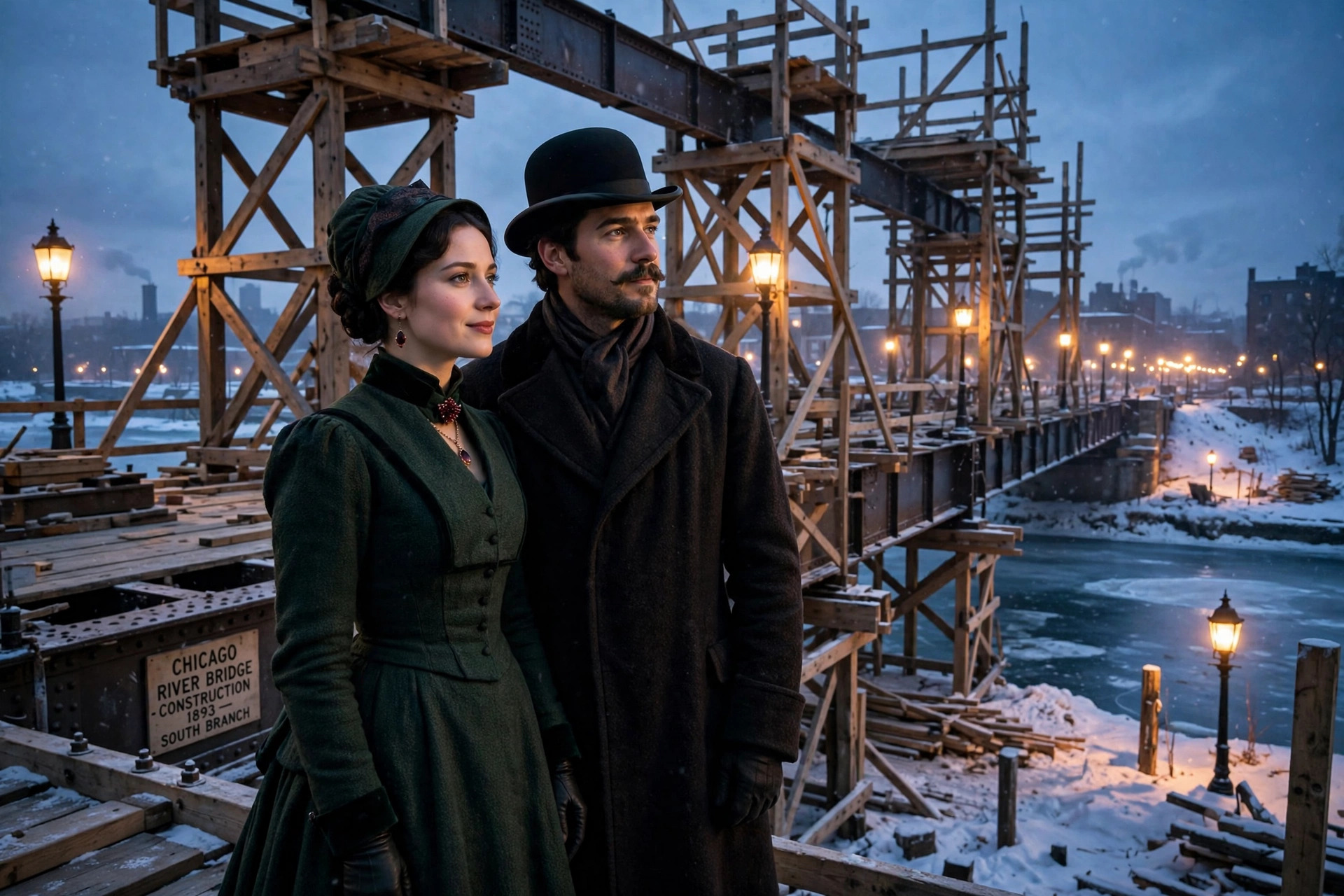
The works of Hale Bridge and Ironworks stood on the south branch where the air smelled of coal smoke and cut oak, and the falsework of the unfinished crossing rose out of the water like the skeleton of a wooden cathedral. Cordelia came down the plank road in her father's old coat, and the men touched their caps the way they had when he lived, which hurt more than she had prepared for.
She found Samuel Reyes at the far end of the drafting loft, arguing gently with old foreman Mick Dunn about the wrapping on the number three cable. He was thirty-four, lean, with a scar through one eyebrow left over from a mining-camp childhood in Colorado, and hands that drew figures the way other men wrote love letters. He did not look up until Dunn looked up, and then he set down his chalk and gave her his whole attention, which she noticed the way you notice a fire in a cold room.
"Miss Hale." He wiped his hands uselessly on a rag. "I am sorry about your father. He was the only client I ever had who argued with me correctly."
"He spoke well of you," she said, which was true. "Mr. Reyes, I need to know what you lose if my uncle sells this firm."
He was quiet for a moment, and she learned later that his silences were never evasion, only load calculation. "The Reyes anchorage," he said at last. "Twelve years of my life. Vandermeer uses their own standard, so it goes in a drawer. And there is a ledger I keep. Men hurt on this firm's work, paid monthly from my own share. Mick has one arm and four children. Vandermeer does not inherit my promises."
"Then I have a proposal you will find professionally familiar," Cordelia said. "I need a structure that will hold. I am told you build those."
He understood her in perhaps three seconds, because his eyebrows went up and then came down again into something more careful. "You want a husband the way men want a patent," he said. "Filed, sealed, and never looked at again."
"I want a partner who wants the same bridge I want," she said. "The rest we can negotiate."
"No." He said it without heat, which was worse. "I will not be a pawn in a will, Miss Hale, and I will not be married to a woman who counts the days to her release. I have watched a marriage of convenience from the inside. My mother made one to get out of a mining camp, and my father never once forgave her for needing it." He walked her to the gate through the mud and the cold, and at the planked crossing he stopped. "I will consider it on one condition. Answer me honestly by Friday, not why you need the clause, but what you want after it. If the answer is only the firm, we have nothing to say to each other."
The Terms
On Friday evening they sat in her father's library on Calumet Avenue with the gas turned low and a fire that Mrs. Feeney had built too optimistically. Cordelia answered his question first, because she had written the answer out twice and burned it once.
"After the clause," she said, "I want the crossing finished. I want my name on the drawings, and I want a life that I chose on purpose, instead of one that happened to me while I was being useful. That is the whole of it."
"That," said Samuel, "is more than I expected, and I expected a great deal. My answer is shorter. I want to build things that outlast me, and I want to stop eating supper standing over a sink in a boarding house."
She laughed before she could stop herself, and something in his face said he had been waiting to hear exactly that sound. Then they got down to business like engineers, which is to say thoroughly, without flinching, and on paper.
"Article the third: neither party shall be required to share a bedroom, and neither party shall enter the other's room uninvited. Invitations, once given, may be renewed."
There were eleven articles in all. Two years, and then either might dissolve the arrangement without cost or argument. She would sign her drawings C. Hale regardless of what the county clerk wrote. He kept his pension ledger and his partnership share, and she would never ask him to choose between her and it. The household accounts would be hers; the site accounts his. And there was a clause he insisted on adding in his own handwriting, the ink still wet when she read it.
"Article the eleventh," he said. "We tell each other the truth about matters that matter. Even when it costs. Especially then."
"That is the most expensive term on the page," she said.
"It is the only one with any value," he said. "You understand you may stop this at any point before the judge signs. Any point at all, Cordelia. I would rather lose the anchorage than win it with a woman who felt trapped."
"And you may stop," she said. "I am not doing this because I am weak, Samuel. I am doing it because I am strong, and I am tired of being treated as neither."
They shook hands on it, which felt absurd, and then they sat a while longer in the failing firelight, and neither of them could name the thing that had already begun, because neither of them had a term for it yet.
Small and Gray
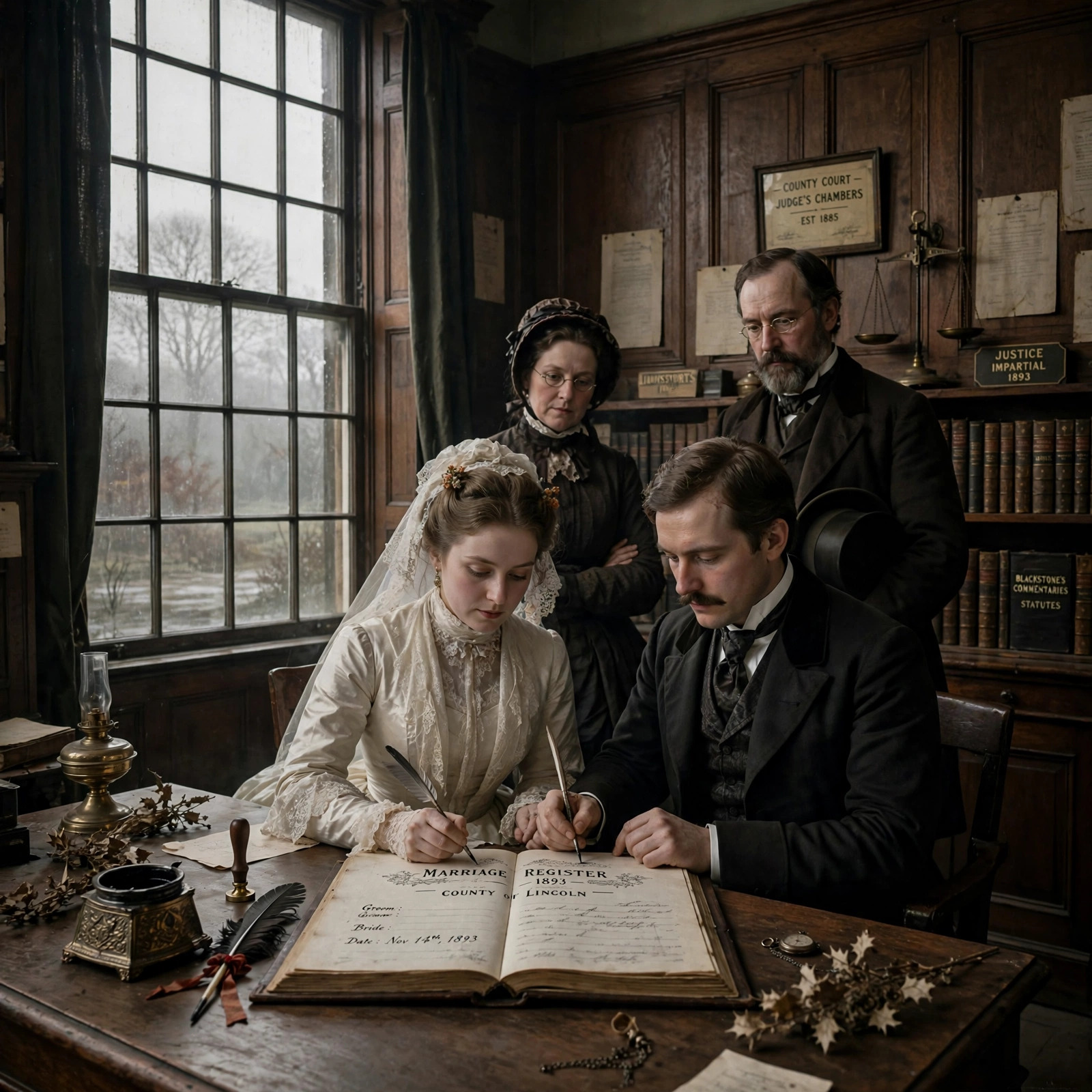
They were married on the twentieth of November in a judge's chambers, with Mick Dunn and Mrs. Feeney for witnesses and the radiator banging like a stubborn riveter. Cordelia wore her ordinary dark wool and her mother's garnets. Samuel wore his one good coat. The ring had come from Denver in a tobacco tin, his mother's plain gold band, with a note in a sloped immigrant hand that said, She would have liked this girl. Tell her the mine took nothing that mattered.
When the judge asked if they took each other, Samuel went briefly off the approved text. "I take her for the term of years," he said, looking at Cordelia and not at the judge, "and for whatever comes after, if she will have it." The clerk coughed. Cordelia answered in the approved words and then, very quietly, in her own: "And I will have it."
The kiss for the record was brief and perfunctory and entirely failed to be perfunctory. His hands were cold. Her fingers were ink-stained, because she had been correcting load tables until an hour before, and he looked down at them afterward and said, "You work at night," in the voice of a man filing away a fact he intended to keep. It was not a compliment about her hands. It was better than a compliment, and she knew it, and she said nothing all the way down the courthouse steps because if she had spoken her voice would have betrayed how much a two-minute ceremony had shaken her.
Mrs. Feeney wept into her good shawl and then fed everyone cold chicken as though a famine had been averted, which in a sense it had.
A marriage entered to satisfy a will was lawful in Illinois all the same; the courts asked only whether both parties had consented freely, and no two people in Cook County had ever consented more carefully.
Housekeeping a Fortress
Samuel gave up his rooms in the boarding house on Wabash with visible relief and moved into the Calumet Avenue house, which he called the fortress and Mrs. Feeney called the museum. The first week they negotiated the household the way two nations negotiate a border. He drank black coffee at five and read at the kitchen table because the gas in his room was poor. She worked until two in the morning on the accounts and the drawings. They fixed the boiler together on a Tuesday, arguing pleasantly the entire time about draft and flue, and discovered in the doing of it that they argued well, that each of them sharpened rather than dulled the other.
She found his mother's letters in a crate of his books and read one by accident and then, with his permission, several more, and understood the shape of the man she had contracted with. He had come out of the Colorado camps with his mother's arithmetic and his father's silence, and he built everything as though something in it might be asked to save a life. She told him about her mother's long illness, and the year of spoons and salt cellars, and how her father had taught her loads at the dinner table because grief had made him unable to say anything directly, and love of his daughter had made him teach her everything he knew.
They invented a system of notes held to the icebox by a tin clip, because their hours never matched. Boiler man came, paid him, do not argue about the flue again. Found your spectacles in the truss drawings. You are welcome. Mrs. F. made mutton. I have bribed her with a new kettle. It will not happen twice. She had not told him she hated mutton. She never found out how he knew, and when she asked he said only, "You made a face in April at the Delmonico luncheon. I keep good records."
They shared the library at first and then divided it with a chalk line down the center of the carpet, half in jest, and within a month the line was crossed so often in both directions that it wore away entirely, and neither of them remarked on it, and both of them noticed.
The Audit
Ambrose moved in December with the efficiency of a man who had been waiting years. He filed an affidavit in chancery questioning the validity of the marriage, a sham arranged to defeat a testator's intent, his papers said, and simultaneously he bought the firm's outstanding note from the Illinois Trust and called it due in thirty days. If they could not pay, the court would force liquidation, and the liquidation would be complete before Cordelia's birthday, which made the whole question of the clause delightfully academic.
"He is not trying to win," Samuel said, spreading the papers across the kitchen table at eleven at night. "He is trying to exhaust us. A sham marriage suit and a called note in the same month. He wants us bleeding from two places."
"Then we stop bleeding and start counting," said Cordelia, and they worked three nights running in the office above the drafting loft, and it was the strangest courtship in Chicago, two married strangers going through a dead man's ledgers together by lamplight. She found it first: a steel shipment from September double charged by the mill, eleven thousand four hundred dollars that her father's clerk had never clawed back because her father had died before the error surfaced. Samuel found the second thing, which was better: a contractor upstate had been using his anchorage method for eight months without license, and the unpaid royalty, with the documentation Samuel kept like scripture, was worth nine thousand a year and a warning to every other infringer in the valley.
They refinanced with First Trust inside two weeks, the crossing contract itself as security, and Cordelia presented the package to the bank's committee herself, alone, in a room of gray-bearded men who had expected Ambrose's counsel. She spoke for twenty minutes about cash flow and patent royalties, and when she finished, the committee's chairman asked where they might inspect the anchorage works, and she said, "Gentlemen, I will walk you there myself. It is my bridge."
Ambrose came to the house after that, hat in hand like civility, with a check for a very large sum and a suggestion that an annulment could be arranged quietly, no scandal, everyone respectable. "You are a sensible woman," he said. "Sensible women take the money."
"You mistake me for someone who can be bought at a discount," Cordelia said, and gave him back his check, and stood in the doorway until he was down the steps and into his carriage, and then she went inside and found Samuel pretending to read in the parlor, and he said, "I heard every word through the door," and she said, "Good," and they sat together in the lamplight a while, not touching, entirely together.
Storm Night
The ice storm came at the end of January, the kind the papers called the worst in a decade, and it came for the falsework. The temporary timber towers holding the crossing's first span took the wind and the freezing rain all night, and by the time Samuel got the telephone message from the night watchman, the question was simple and enormous: could the towers carry the added weight of ice and the wind of the coming week, or must the city inspector halt all work at dawn while they rebuilt?
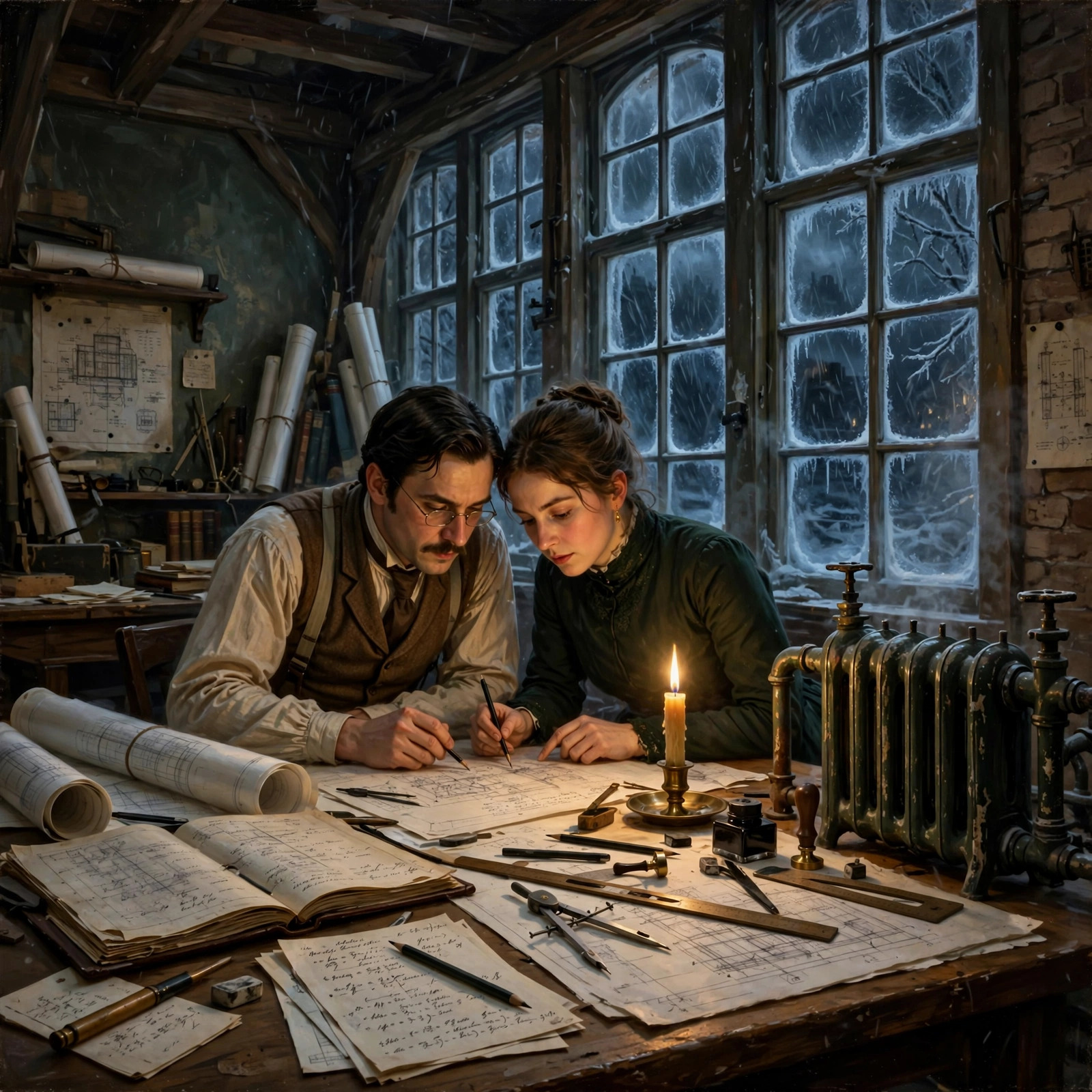
A halt meant lost weeks, penalties, and Ambrose's petition granted on a silver plate. They worked alone in the drafting office from half past one, coats on, a lamp apiece, the storm rattling the tall windows like a creditor. Wind on ice on timber, three loads braided together, and the old tables gave ranges instead of answers because no one had ever built towers quite like these in quite this weather.
At three o'clock her pencil stopped. "Samuel. If I am wrong about the ice adherence, we are not losing weeks. We are losing men. Those towers come down on top of the night gangs."
"Then we do not guess," he said. "We bound it. Show me your worst case."
And somewhere in the third hour, while she recalculated and he checked her figures line by line, the truth came out of them the way water finds a crack. He told her about the Victor mine in 1879, his father's shift, the men who had not come up, and the mother who had married badly to get out and taught her son that a structure either holds or it kills. "Everything I build," he said, "I build to hold. I have never known how to build anything else, including this." He said the last word to the ledger, not to her.
She told him what she had never told anyone, that she was afraid there was nothing under her name, that she had been her father's residue, useful and unexamined, and that if the firm was taken she did not know what would remain. "I am twenty-nine years old and I have never once been asked what I wanted until you asked me in this room," she said. "That is the truth of article eleven. It costs exactly what I said it would."
"Cordelia." He set down his pencil. "The numbers close."
"They close?"
"Your worst case holds. The towers carry it with margin, if we set two counter ties by Friday. Your figures. They are right, and they are elegant, and your father would have argued with them for an hour and then signed them."
She put her hands flat on the table and breathed, and the storm went on outside, and the little lamp hissed, and it was four in the morning and they had just, together, between them, saved two hundred jobs and each other's good name and possibly several lives. Samuel looked at her across the scattered papers, and whatever he had been carrying since the courthouse steps came up all at once.
"The paper made us husband and wife in November," he said. "This is what made us married. I want that on the record before any dinner party in this town hears of it. Cordelia, I would like to kiss my wife."
"You may," she said. "I have been waiting eleven weeks, which by my accounting is a very long load duration for a member this size."
He laughed, and then he kissed her, carefully at first and then not carefully at all, and the storm hammered the windows and the lamp burned steady, and the calculations could wait until morning because for once nothing in the room was temporary. She closed the ledger herself. She took his hand. The office had a cot in the back room for night crews, and the door had a latch, and everything that happened after that was between two adults who had negotiated every article of their lives and needed no further negotiation now, only consent, freely renewed, which they had.
In the morning there were two cups of coffee on the kitchen table and one new note on the icebox in her handwriting: Married. Properly. M.
The Public Face
Society learned of the marriage in the way society learns everything, late and incorrectly. Ambrose had done his work well; the whisper was that the engineer had married the heiress to steal the firm, and Mrs. Colgate-Hayes's dinner on Prairie Avenue in the second week of February was to be the arena where the whisper was either confirmed or buried. Samuel suggested they decline. Cordelia refused.
"He wants us hiding at home like people with something to conceal," she said, doing her hair in the glass while he held the pins, an arrangement they had fallen into that neither of them had planned. "We go. You will wear the good coat. I will wear the garnets. And when someone is rude, I will be ruder, and you will look proud, which you manage anyway."
The dinner was forty covers and one ambush. It came over the fish course, from a matron with lorgnette and excellent aim. "They say, Mrs. Reyes, that yours is a marriage of convenience."
The table went quiet in the particular way of tables waiting for blood. Cordelia set down her fork.
"Madam," she said, "all marriages are convenient. Mine is simply honest about it." There was a startled pause, and then laughter, the good kind, the kind that changes the temperature of a room, and Samuel did not look proud so much as openly, dangerously delighted, and the ambush died at the table where it stood. By the time the dessert came, three of the men present had asked about subscribing to the crossing's completion bond, and Mrs. Colgate-Hayes herself had extracted a promise of the first drawing of the finished bridge for her library wall.
Word of the dinner reached the yard the next morning, distorted and improved, and the men gave Samuel and Cordelia a cheer when they walked the plank road that made the old foreman Dunn shout, "About time, whichever way you mean it," and the two of them laughed like the newly foolish people they were.
The Choice
Ambrose made his final move on the tenth of February, two days before the birthday, and it was his best one. Through Prentiss came the offer: two hundred thousand dollars to Cordelia, and a consent annulment filed quietly, the marriage dissolved within the two-year window so that Item the ninth would operate and the holding would revert to him anyway. Or, if she declined, a fraud suit in chancery that would bleed the firm for years regardless of outcome. "Your uncle observes," Prentiss said drily, "that sentiment is expensive."
That night Samuel put a paper on the kitchen table, and Cordelia read it with her heart going like a trip hammer. It was a release, drawn in his own hand. It said that Samuel Reyes renounced any claim under the marriage and would join in an annulment whenever she wished, two hundred thousand dollars, her freedom, her own name entire, no argument from him, ever.
"If you want the door," he said, "I will not hold you by a clause. I have watched what it does to a person, being kept. I will not do it to you for all the shares in Illinois."
She looked at the paper for a long time. Then she stood, opened the stove door, and fed the release into the fire, and watched it curl and go.
"I am not staying because of Item the ninth," she said, turning to him. "I am staying because of the storm, and the icebox notes, and the way you check my figures line by line, and the mutton, and the chalk line we wore off the library carpet without discussing it. I am staying because I love you, Samuel Reyes, and I have for longer than I was willing to put in the ledger. If you want a term of years, I am afraid the term has been amended."
He crossed the kitchen in three strides and held her the way he built things, to hold. "Amended," he agreed, into her hair. "Indefinitely. All articles."
She wrote to Ambrose herself the next morning, declining in three sentences, and Prentiss reported afterward that the fraud suit had died in the drafting, because a marriage with joint accounts, a shared household, a refinanced bridge contract, and two witnesses who had watched the defendants argue about a boiler draft was manifestly, expensively real, and no chancery judge in the state would touch it. Ambrose retired to Lake Geneva in the spring to grow roses and complain about modern engineering, which everyone agreed was a suitable load for him.
On the twelfth of February, her thirtieth birthday, the first test load rolled across the finished crossing at dawn, a locomotive and two cars of stone, and the towers she had bounded in the storm held the whole of it with margin, and the men cheered, and Cordelia stood on the deck of her father's bridge with her husband's hand at her back. He gave her a drawing, rolled and tied. It was the anchorage section, the twelve-year design, with the completion date inked in the corner and two lines beneath the title block: C. Hale Reyes, engineer, and under it, in his careful hand, his own name.
"We were legal in November," he said. "This is the part I vow." And he said the real vows there, no judge, no clerk, no clause, out over the water in the cold bright morning, and she said hers back, and the river ran under them the way it always had, indifferent and carried, and the bridge held.
Later, people in Chicago would tell the story in various ways, some scandalized and some envious, but the people who actually knew them only ever told the true version: that a will had supplied the paperwork, and two stubborn engineers had supplied everything else, one ordinary morning at a time, and that of all the structures on the south branch of the river that year, the one with the longest calculated life was never on any drawing at all.
Get notified when new stories drop

Marcus Hale
Marcus writes slow-burn and marriage-of-convenience stories where logistics become intimacy and competence is a love language.
Leave a comment
Comments